


Shopping Bag
No products in the cart.
In ancient Hawaiʻi, tools were never just tools—they were extensions of identity, survival, and spirituality. Among the most versatile and symbolically powerful implements was the ihe, a short spear that played a vital role not only in warfare, but also in food gathering, ceremony, and daily life. Understanding the ihe offers a deeper look into the ingenuity and values of traditional Hawaiian culture.
The ihe was typically crafted from strong native hardwoods such as koa or ʻōhiʻa lehua. Its length varied, but it was shorter than the long throwing spears used in battle, making it easier to maneuver in dense forest or shallow waters. The spear tip was carefully sharpened, sometimes fire-hardened, and occasionally fitted with bone or stone points.
This careful craftsmanship reflected the broader Hawaiian principle of hana noʻeau—skilled, thoughtful work. Tools were made with intention, and the quality of an ihe often reflected the skill and status of its maker.
While the ihe is often associated with combat, one of its most important functions was as a subsistence tool. Hawaiians relied heavily on fishing and foraging, and the short spear was ideally suited for both.
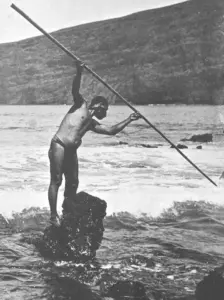
In coastal areas and reef flats, fishers used the ihe to spear fish in shallow water or tide pools. Its shorter shaft allowed for quick, accurate strikes in tight spaces where longer spears would be unwieldy. This method required patience, stealth, and intimate knowledge of marine behavior—skills passed down through generations.
The ihe was also used in the forests to hunt birds and small animals. Because ancient Hawaiians lived in a resource-scarce island ecosystem, efficient and humane hunting techniques were essential. The spear provided a precise, reusable tool that aligned with the cultural value of taking only what was needed from the land.
Beyond practical uses, the ihe held deep spiritual significance. In traditional Hawaiian belief systems, everyday objects could carry mana—spiritual power—especially when used in sacred contexts.
Spears were often present during religious ceremonies, particularly those honoring Kū, the deity associated with warfare, strength, and governance. The ihe symbolized readiness, protection, and the authority of chiefs (aliʻi).
During the Makahiki season—a period dedicated to the god Lono—warfare was kapu (forbidden), and weapons were set aside. Even then, spears retained ceremonial importance, appearing in processions and ritual displays as symbols of power that had been intentionally restrained. This contrast underscored the cultural balance between war and peace.
Proficiency with the ihe was an important skill for Hawaiian men, especially warriors and hunters. Training often began at a young age and included not just throwing and thrusting techniques, but also physical conditioning, strategy, and discipline.
Among the aliʻi, finely crafted spears could also function as status symbols. The quality of the wood, the straightness of the shaft, and the sharpness of the tip all conveyed prestige and capability. Owning and wielding an exceptional ihe communicated both social rank and personal mastery.
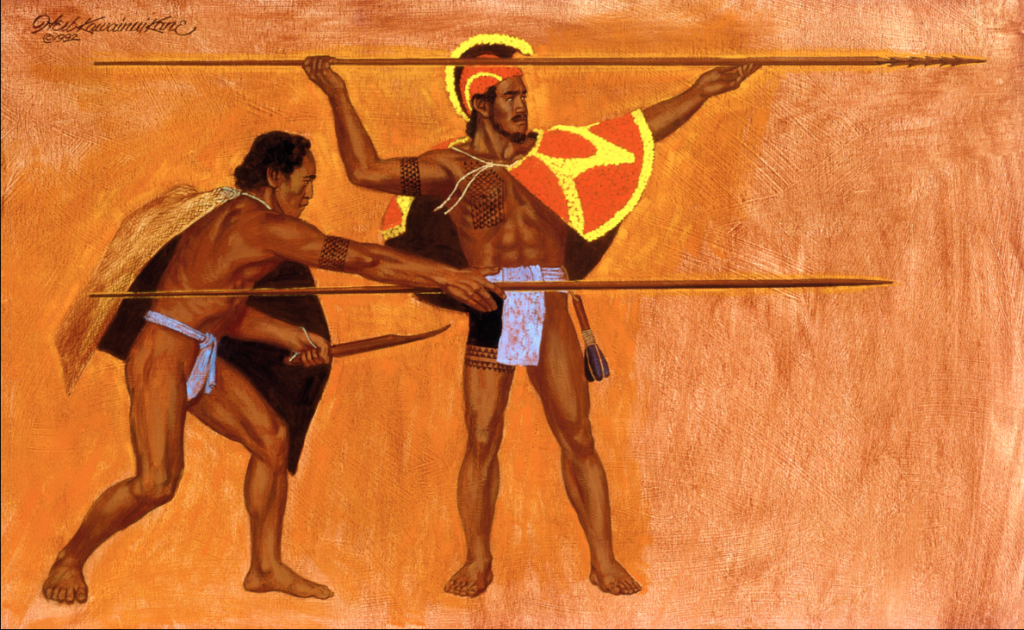
Although the ihe is no longer used for daily subsistence or warfare, it remains an important cultural symbol. It appears in museums, cultural demonstrations, and traditional martial arts such as lua, where practitioners preserve ancestral combat techniques.
More importantly, the ihe represents the adaptability and resourcefulness of the Hawaiian people. It is a reminder that survival in an isolated island environment required tools that were multifunctional, carefully crafted, and deeply embedded in cultural meaning.
The ihe was far more than a short spear, it was a bridge between survival and spirituality, between the physical and the sacred. From spearfishing in tide pools to proving the worthiness of an ali’i to lead, it embodied the Hawaiian values of balance, skill, and respect for the natural world.
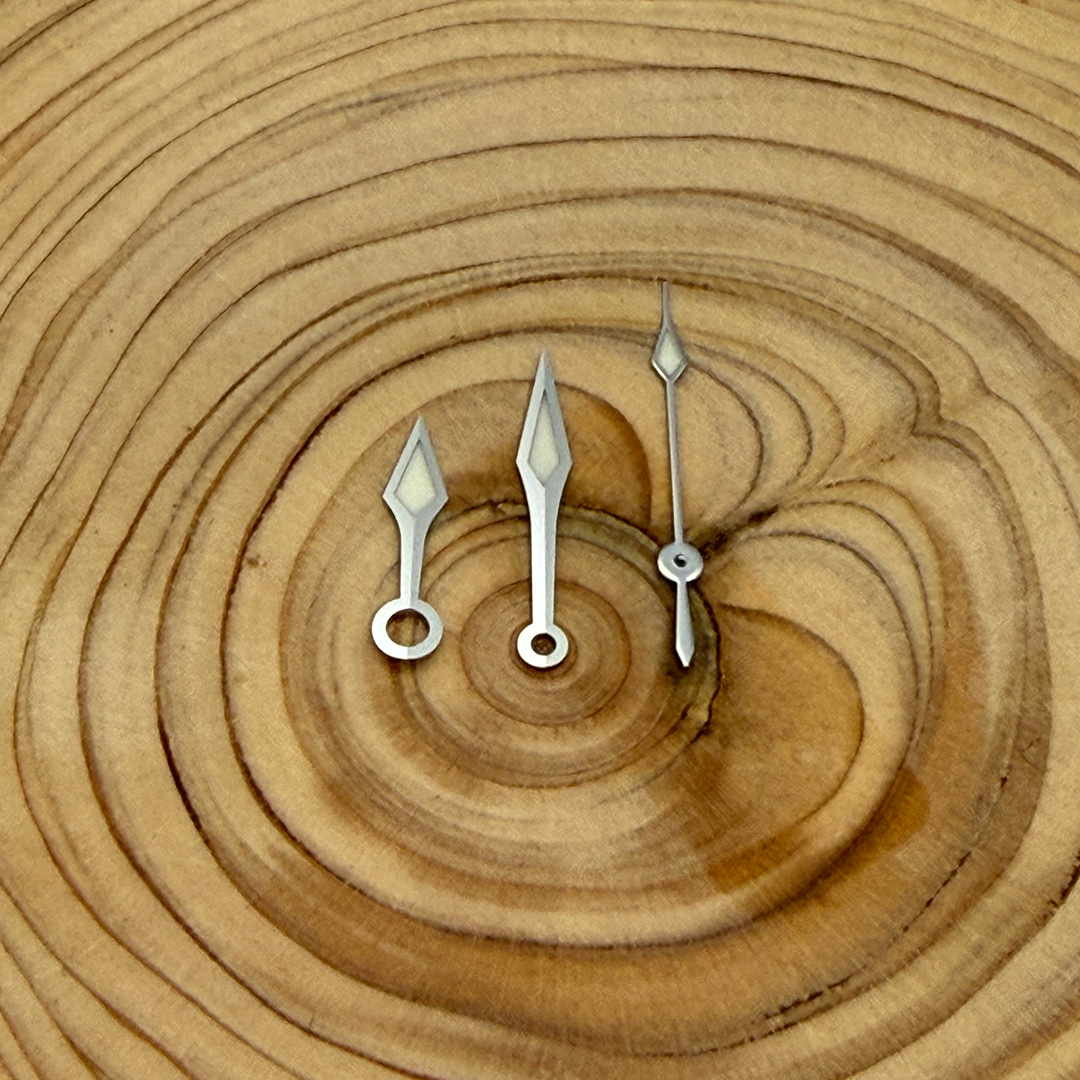
By studying objects like the ihe, we gain insight not just into ancient Hawaiian technology, but into a worldview where every crafted item carried purpose, story and spirit. This is a view strive to perpetuate at Aliʻi Watch Company and the reason we designed our watch hands after the ihe.
Leave a Reply